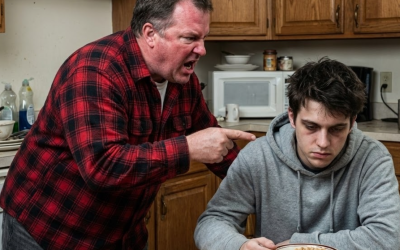

“Mateo, why are you so clumsy? Be more careful.” I stared at Esteban. He frowned back and said in a low voice. “Araceli, it was an accident. Nothing more.” She turned around, a spark of anger in her eyes. “You always defend him, and I’m left looking like the meanie.” The atmosphere at the table became tense.
Mateo lowered his head, his eyes filling with tears. I hugged him, feeling a deep pain. It had only been a few days. Araceli tenderly reminded him about school, and now he seemed like a completely different person. I sat next to him, watching silently, trying to put the pieces together in my head. Today
he was irritable. The other day he was a sweetheart. Today he used his left hand.
The other day his right. These small differences, one by one, accumulated in my mind, like pieces of a puzzle I still couldn’t see complete. I told myself I had to calm down, but every time I looked at Araceli, I saw a stranger, as if she weren’t the daughter-in-law I’d lived with for so many years.
A few days later, I took Mateo to school. He held my hand as we walked down the usual cobblestone street. Suddenly, he stopped, looked at me, and said in a sad voice, “Grandma.” Yesterday my mom taught me how to write. And she was very patient. Her handwriting turned out beautifully, but today she didn’t even want to look at my homework.
She told me to do it myself. I bent down to look into his pale little eyes and felt my heart sink. Your mom was busy. “My son, don’t be sad,” I said, but my voice was shaking. Mateo nodded, but his gaze was still filled with disappointment. I hugged him, feeling incredibly helpless. He’s only
seven years old.
How could I understand something I couldn’t even decipher? That night we sat down to dinner again. Suddenly, Araceli took a small notebook out of her bag and began to write something with her left hand. Esteban, who was serving himself food, suddenly laughed. “Hey. Since when do you write with your left hand?”
You look fine, weirdo. Araceli stopped dead in her tracks, a forced smile on her lips.
Oh, no more. I’m testing my love. She quickly put the notebook back in her bag, but I could see a flash of panic in her eyes. Esteban shook his head and said nothing more. But I knew he’d noticed something strange too.
I sat there, gripping the spoon, trying to keep a straight face, but inside, doubts grew like a slow fire. One morning, I took the empty spice jar and crossed the usual cobblestone street to go to Doña Remedios’s house. Araceli had borrowed it a few weeks earlier, saying it was to make the mole poblano that Esteban likes so much. I knocked on the door, and Doña Remedios opened the door with her usual friendly smile.
Estela, come in. Let me make you some coffee, she said, still holding a rag. I gave her the jar, intending to thank her and leave, but she pulled me to sit on a wooden chair in her kitchen. The atmosphere was warm, smelling of roasted coffee, but I couldn’t relax. Doña Remedioslooked at me with doubtful eyes and lowered her voice. Estela, don’t get angry about what I’m about to tell you.
Your daughter-in-law has changed her character. One day she greets me nicely, happily, and even asks about my children. But yesterday she stopped by. I signaled to her, and she didn’t even notice me, as if she didn’t know me. Doña Remedios’s words were like another stone in the troubled lake of my heart. I forced a smile and answered.
She must have been in a hurry.
Remedios, you see how young people are these days, but inside I was a mess. I knew Doña Remedios wasn’t just talking. She’s a very sentimental person, always paying attention to details. If even she noticed how strange Araceli was, then my suspicions were no longer just my imagination.
I stayed a little longer. I took a sip of coffee. It was cold by then, and I said goodbye to leave, feeling heavy-hearted. On the way back, I stopped by Don José’s bakery, where I always buy sweet bread for Mateo. Don José was serving, and when he saw me, he smiled. “Doña Estela, what are we going to give the champion today?” I asked for some
conchitas, and suddenly he asked me, “You’re Esteban’s mother, aren’t you?” His wife came the other day, very friendly. She even told me how delicious my bread was.
But this morning she came back with a sour face. She bought the bread and didn’t even say thank you. She left straight away. I stiffened, clutching the handle of my bag. “She must have been tired, José,” I replied, my voice trembling. I thanked him quickly and left. Don José’s words
were another knife, cutting deeper into the doubts growing inside me.
When I got home, I made some tea and sat on the porch. The wind blew softly, carrying the scent of daisies from the garden. I looked toward the street that leads to the market, where Araceli always went. Suddenly, I saw her returning carrying her grocery bag, but she greeted me with a dry voice.
Good afternoon, Mom.
Without a smile, without the joy of yesterday, when she boasted that she’d gotten a cheap bunch of cilantro. I nodded and answered in a low voice. “Are you back yet?” But inside, I couldn’t help but watch her more closely. The blouse she was wearing today was navy blue, different from the white blouse she was wearing when
she left.
I tried to ask her in a soft voice. “Why did you change your blouse?” Araceli paused for a second and then answered quickly. “Oh, it’s because I got it dirty and had to change it.” She smiled half-heartedly and quickly went into the kitchen. I stood there with the cup of tea in my hands, feeling like a rock was crushing my chest.
The words from Doña Remedios, from Don José, and the way Araceli answered everything forced me to stop ignoring things. That night we were all having dinner. Mateo was telling me things about school in his cheerful little voice, but I noticed that Araceli just nodded without answering, like other times when
Esteban asked her, “Have you finished eating so your mom can clear the dishes?” Mateo suddenly turned to me and said innocently, “Grandma!” Oh, my mom didn’t sing me to sleep. Yesterday she did sing me the song, “Vejita,” that you always sing to me, and it sounds so beautiful.
I looked at Araceli, who was serving herself food without reacting, but Mateo’s words were like a pin prick in my heart. That lullaby, that beautiful little sky I used to sing to Esteban and Iván. Only Araceli and I knew it in this house. So why did she sing it yesterday and not today?
Why did she change so quickly? I got up to clear the dishes, but my mind was no longer there.
I remembered the times Araceli would leave the house saying she was going to see a friend, but come back with a strange look on her face. One day she brought a bouquet of fresh flowers saying it was a friend’s gift, but another day she got angry when I asked her, “Where did you go today that you came back so late?” I used to think they were unimportant things, but now they seemed like pieces of a much bigger secret. I didn’t want to believe Araceli was hiding something from me.
But every word, every gesture of hers, made me doubt. That night, after cleaning the kitchen, I sat at the dining room table and took an old notebook out of a drawer. My hand was shaking as I wrote the first line. 3:00 PM. Araceli goes to the market. She returns at 6:00 PM. She’s wearing a blue blouse. Irritable attitude.
I didn’t know what I was doing, but I knew I couldn’t keep pretending nothing was happening. I kept writing. Yesterday she sang Mateo to sleep, tenderly, today coldly. She didn’t sing to him. Each word was a heavy stroke, as if I were recording my suspicions in reality. My old notebook was now full of notes about Araceli.
Each letter was a piece of my doubt, as if I were painting a picture I didn’t dare look at. I sat in the kitchen, staring at the notebook with a heavy heart. I couldn’t keep all these thoughts inside. They were like waves rising and falling, leaving me alone in my confusion.
I needed someone to talk to. Someone who understood me, who wouldn’t judge me, who wouldn’t jump to conclusions.
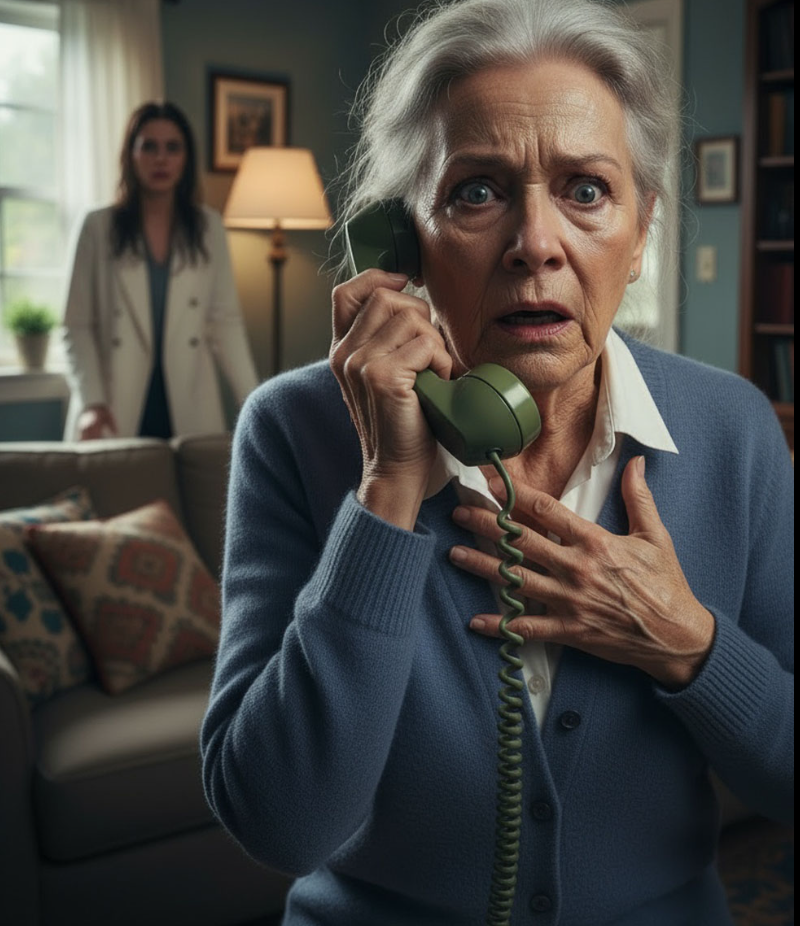
I immediately thought of Carmela, my closest friend, the one who’s been with me since we were young, when we sat knitting under a tree and shared our stories. I picked up the phone, my voice trembling. “Carmela, are you free this afternoon? Let’s go to the little cafe on the corner. I need to talk.” Carmela instantly accepted her voice, as warm as ever.
Estela knew something was wrong with you. Wait for me. I’m on my way there. I felt a little relief, but the worry still weighed heavily on me. I put on my old shawl and left the house for the small café on the corner where Carmela and I had shared so many joys and sorrows.
The place was the same, with its dark wooden tables and that delicious smell of freshly roasted coffee. I chose a table in a corner where the lighting was dim so no one would hear our conversation. I sat there, cuddling the hot cup of coffee but with my soul frozen. I wondered how I was going to
tell her all these suspicions? How could I dare admit that I’m doubting my own daughter-in-law? Carmela arrived wearing a light sweater and carrying a bag of fresh vegetables.
Aby zobaczyć pełną instrukcję gotowania, przejdź na następną stronę lub kliknij przycisk Otwórz (>) i nie zapomnij PODZIELIĆ SIĘ nią ze znajomymi na Facebooku.