

When it was our turn, our attorney did something unexpected.
He didn’t start with money.
He started with evidence.
Medical reports. School records. Therapy receipts. Consent forms. Every document from the last eleven years bore my signature. Natalia’s name appeared nowhere.
Then he asked the judge to let Leo speak.
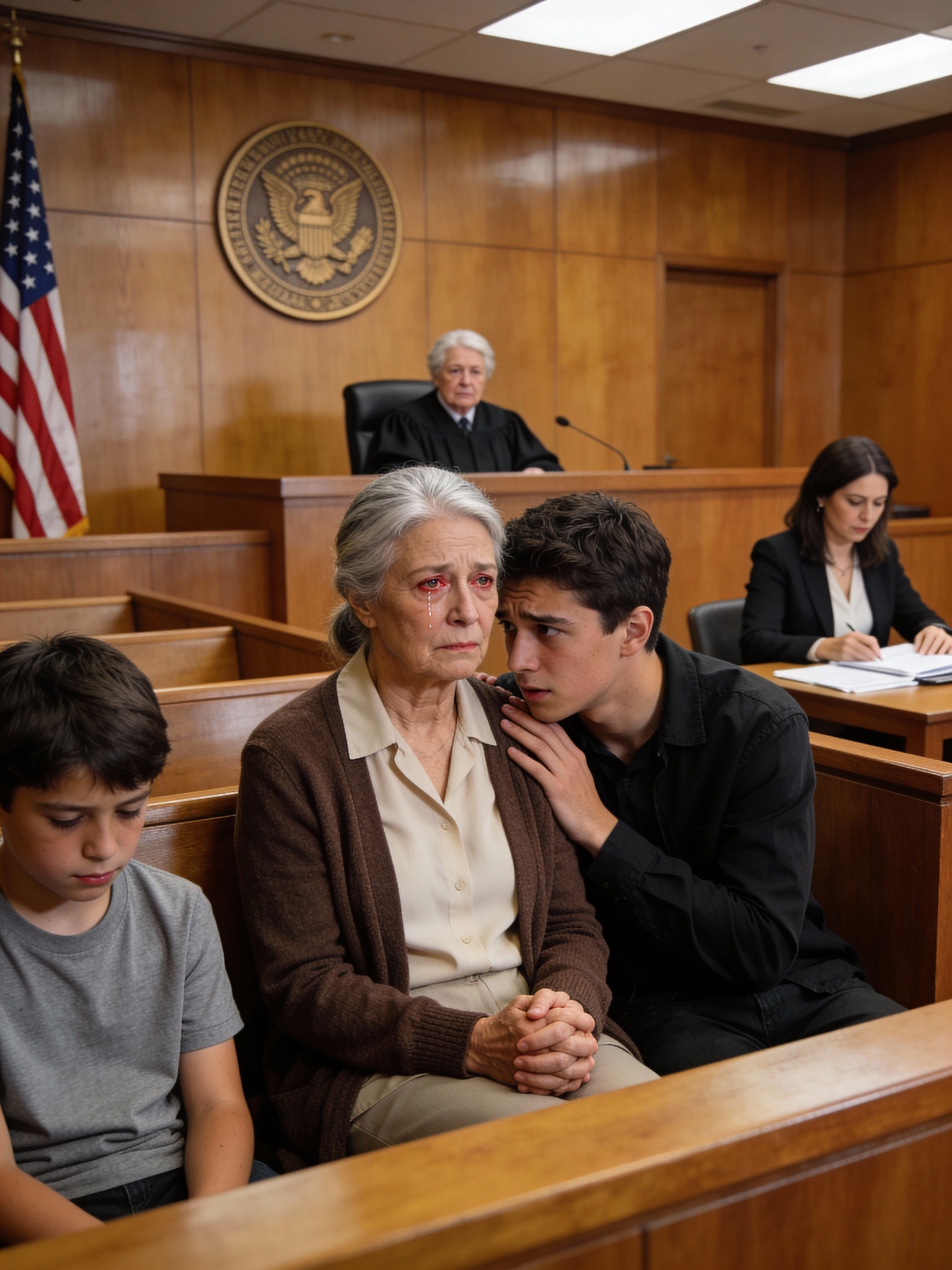
The courtroom went still as my grandson stood. He didn’t look at his mother. He looked at the judge and spoke slowly, clearly—years of effort in every word.
He said he knew who Natalia was. He understood biology. But his life—his stability, his work, his success—had been built with me. He explained that the app was his, created in his room during sleepless nights, with my constant support beside him.
Natalia tried to interrupt. The judge stopped her.
Then Andrés asked to speak.
No one expected it.
He presented a notarized document—signed by Natalia eleven years earlier—formally renouncing custody so she could “rebuild her life without responsibility.” I had never seen it before. Andrés had found it quietly, weeks earlier, while investigating on his own.
The courtroom fell silent.
Natalia’s lawyer went pale. She began to cry, saying she had changed, that she was ready now. But this was no longer about emotions. It was about consistency.
The judge’s ruling was firm: parenthood was not only biology, but presence. Not words, but years of care. Leo would retain protected control of his assets with independent advisors. Natalia would have no access to his money. Her abandonment was formally entered into the record.
I walked out of the courthouse weak in the knees—but peaceful.
We hadn’t won money.
Aby zobaczyć pełną instrukcję gotowania, przejdź na następną stronę lub kliknij przycisk Otwórz (>) i nie zapomnij PODZIELIĆ SIĘ nią ze znajomymi na Facebooku.